3 hr
Whale Watching Adventure from Lajes do Pico
- Entry ticket
- Mobile voucher
- Valid same day
- Free cancellation
Pico Whale Watching — Atlantic Cetacean Expeditions
Sperm whales breach off volcanic shores, naturalist guides decode every surfacing
Compare fares, pick the fit — all bookings are mobile-voucher and eligible for free cancellation where shown.
3 hr
2 hr 30 min
3 hr
| Experience | From | Duration | Rating | Guide | Small group | Free cancel. | Price | |
|---|---|---|---|---|---|---|---|---|
|
Standard Entry
Most popular
Whale Watching Adventure from Lajes do Pico
|
Lajes do Pico | 3 hr | ★ 4.9 | ✓ | ✓ | ✓ | €70 | Book → |
|
Standard Entry
Pico Island Marine Wildlife Expedition by Zodiac
|
— | 2 hr 30 min | ★ 4.7 | ✓ | — | ✓ | €45 | Book → |
|
Standard Entry
Marine Research Whale & Dolphin Expedition
|
— | 3 hr | ★ 4.8 | — | ✓ | ✓ | €86 | Book → |
Worth it for wildlife enthusiasts and nature lovers
Pico whale watching delivers exceptional value through expert-led tours that combine marine biology education with high-probability cetacean encounters. The Azores ranks among the world's premier whale-watching destinations, with resident spotter networks tracking over 20 species year-round—including sperm whales, dolphins, and seasonal migratory visitors. Professional naturalist guides provide real-time commentary on behavior, conservation status, and ocean ecology, transforming each sighting into an educational experience rather than passive observation. Tours typically run 2.5–3 hours and maintain responsible distance protocols that prioritize animal welfare over photo opportunities. The investment pays off strongest for travelers who value marine conservation efforts and scientific interpretation alongside the wildlife encounters themselves. Casual tourists expecting guaranteed close-up interactions may find the ethical observation standards more restrained than commercial operations elsewhere, but serious wildlife observers recognize this restraint as the hallmark of sustainable ecotourism done right.
Bottom line: Pico whale watching tours justify their cost through expert guidance, conservation integrity, and some of the Atlantic's most reliable cetacean sightings.
These experiences complement each other, though most visitors who do both find that boat-based pico whale watching provides a more direct encounter with marine life. Choosing between these methods depends on whether you prioritize active sea-based exploration or the historical perspective of coastal lookouts.
|
Top pick Boat Tour |
Vigia Lookouts | |
|---|---|---|
| Proximity to wildlife | Within meters of cetaceans | Distances of several kilometers |
| Observational perspective | Water-level aquatic viewpoint | Elevated panoramic vantage point |
| Physical activity level | Active boat transit | Low-impact site walking |
| Weather dependency | High (sea state sensitive) | Moderate (visibility dependent) |
| Educational depth | Real-time marine biology | Historical lookout heritage |
| See tickets & prices |
Verdict: Securing pico whale watching tickets offers the closest marine interaction, while visiting Vigias provides a meaningful look at the tradition behind these pico whale watching tours.
Hand-picked experiences loved by thousands of travelers
8 hours
Free Cancellation
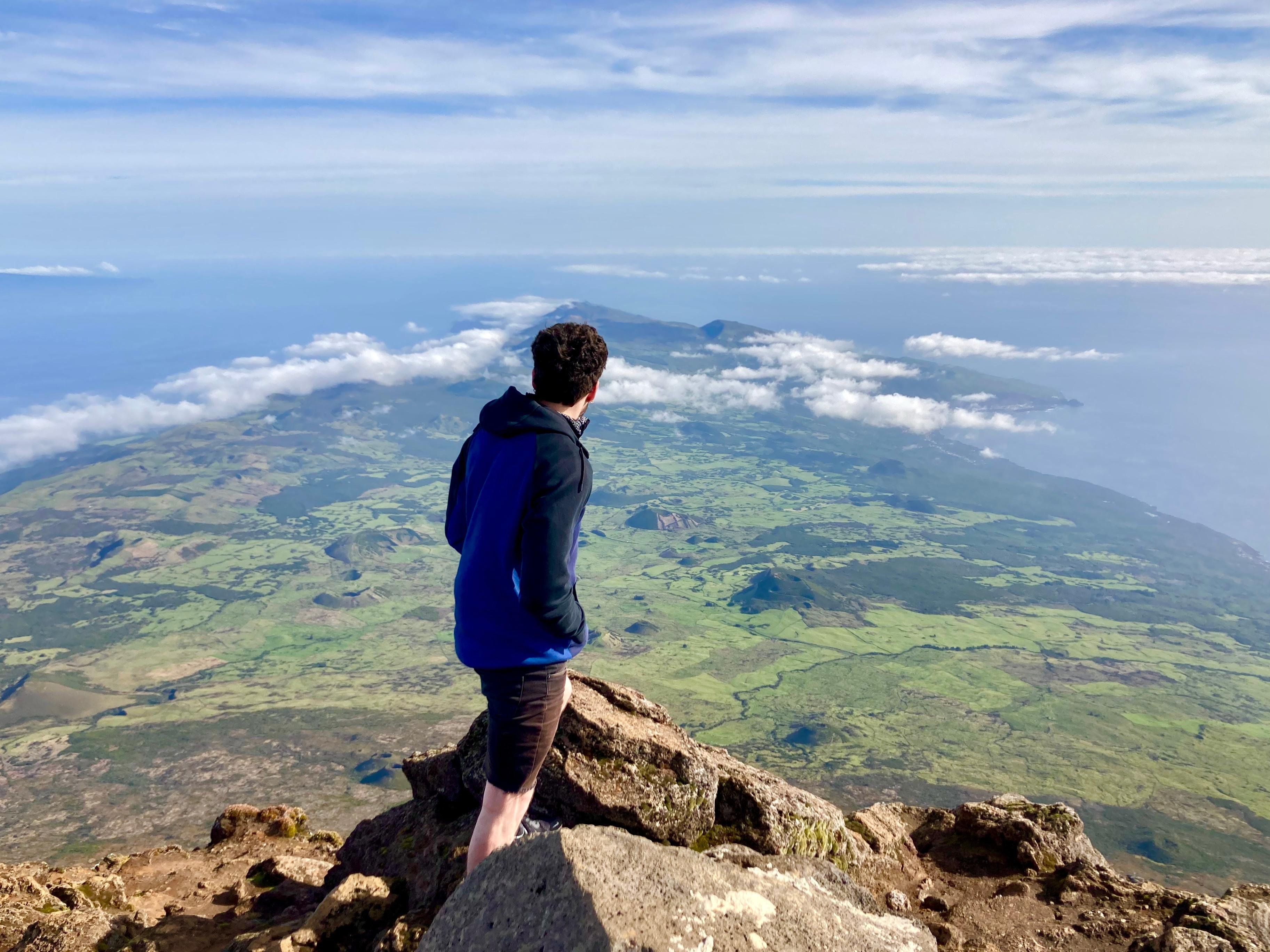
Conquer Portugal's tallest summit on this full-day guided trek through volcanic terrain and native flora.
8 - 10 hours
Free Cancellation
Ascend to the rooftop of Portugal on this guided trek up an active volcano with crater views and summit glory.
4 hours
Free Cancellation
Journey through volcanic craters, azure mountain lagoons, and underground lava caverns on this 4-hour adventure
5 hours
Free Cancellation
Explore UNESCO vineyards, taste rare volcanic wines from independent producers, and swim in hidden natural pools
8 hours
Free Cancellation
Discover volcanic lakes, UNESCO vineyards, and coastal villages on this comprehensive island exploration
1.5 hours
Free Cancellation
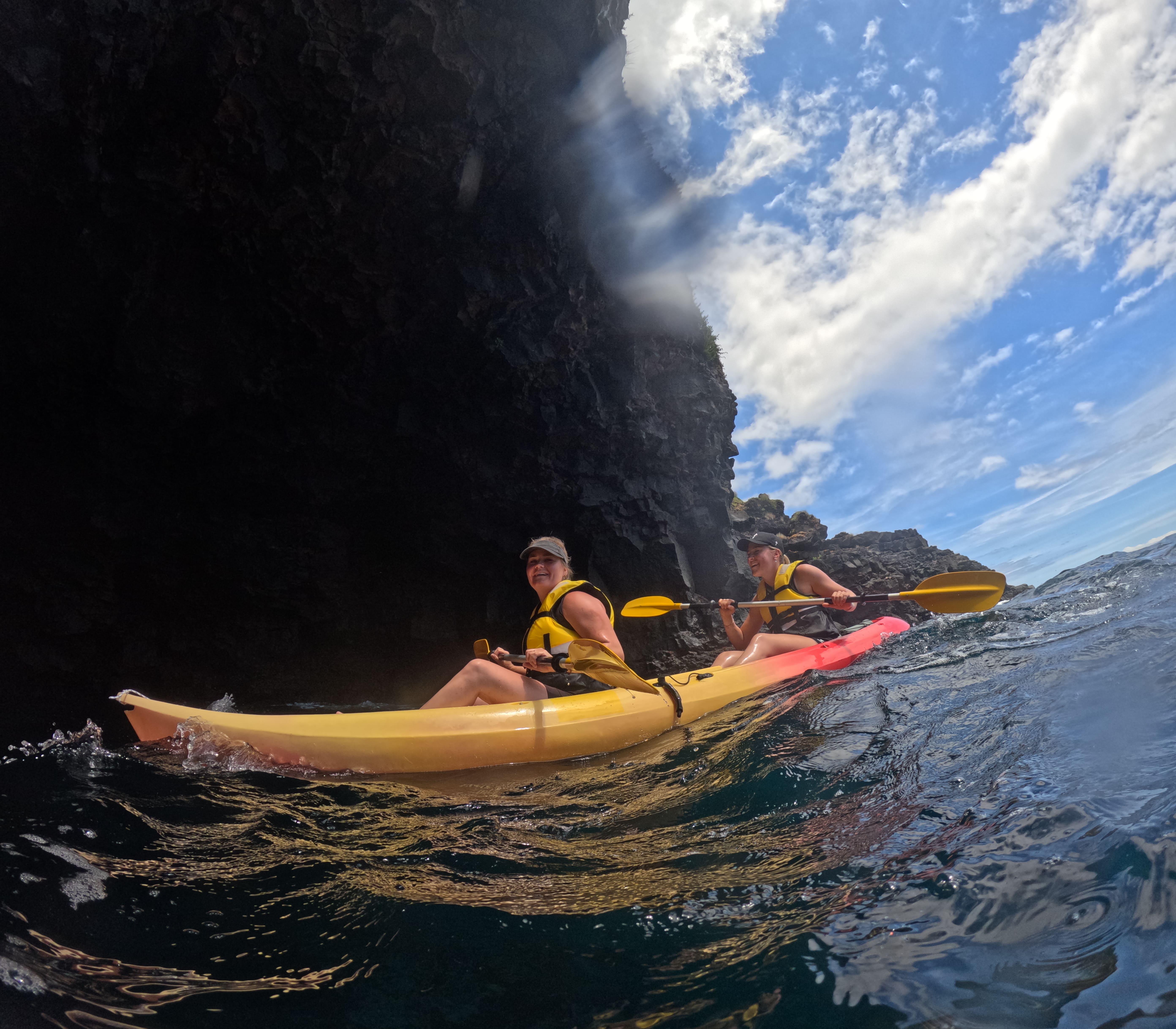
Paddle through volcanic caves and lava formations along Pico's dramatic Atlantic shore
3 hours
Free Cancellation
Sail the Azorean coast at golden hour, swimming in pristine bays and savoring regional treats
2 hours
Free Cancellation
Discover Atlantic marine life while snorkeling over lava rock formations with an experienced local guide
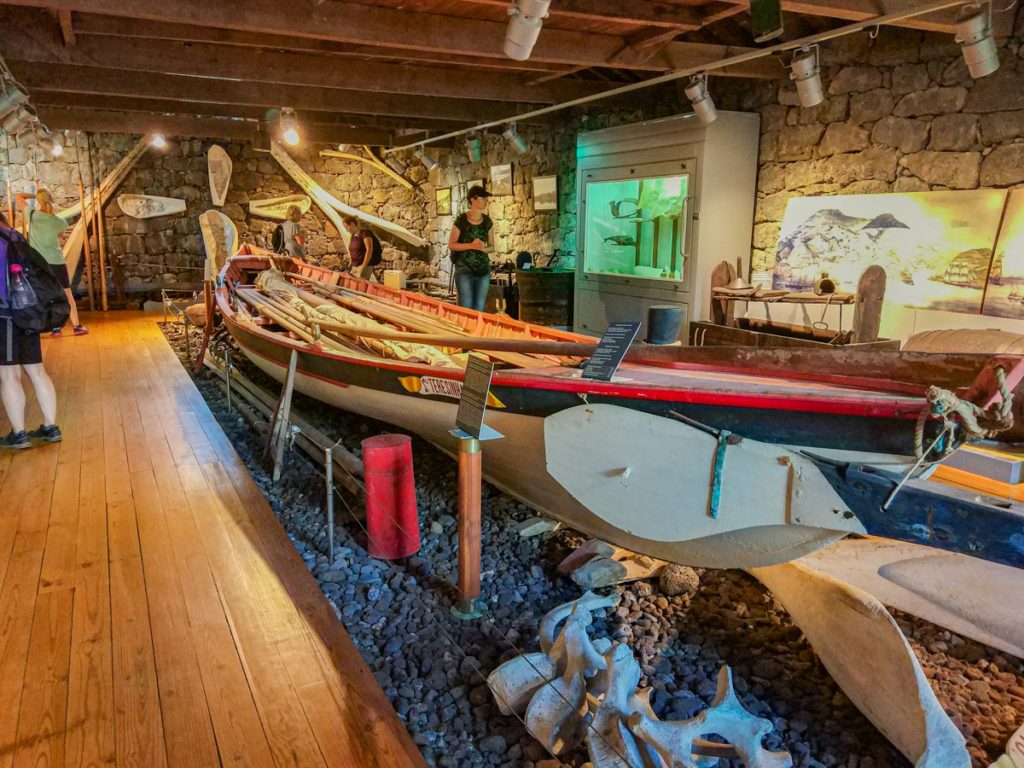
This museum is housed in original 19th-century boat warehouses and displays traditional whaling gear. The site preserves unique scrimshaw art pieces carved from whale teeth.
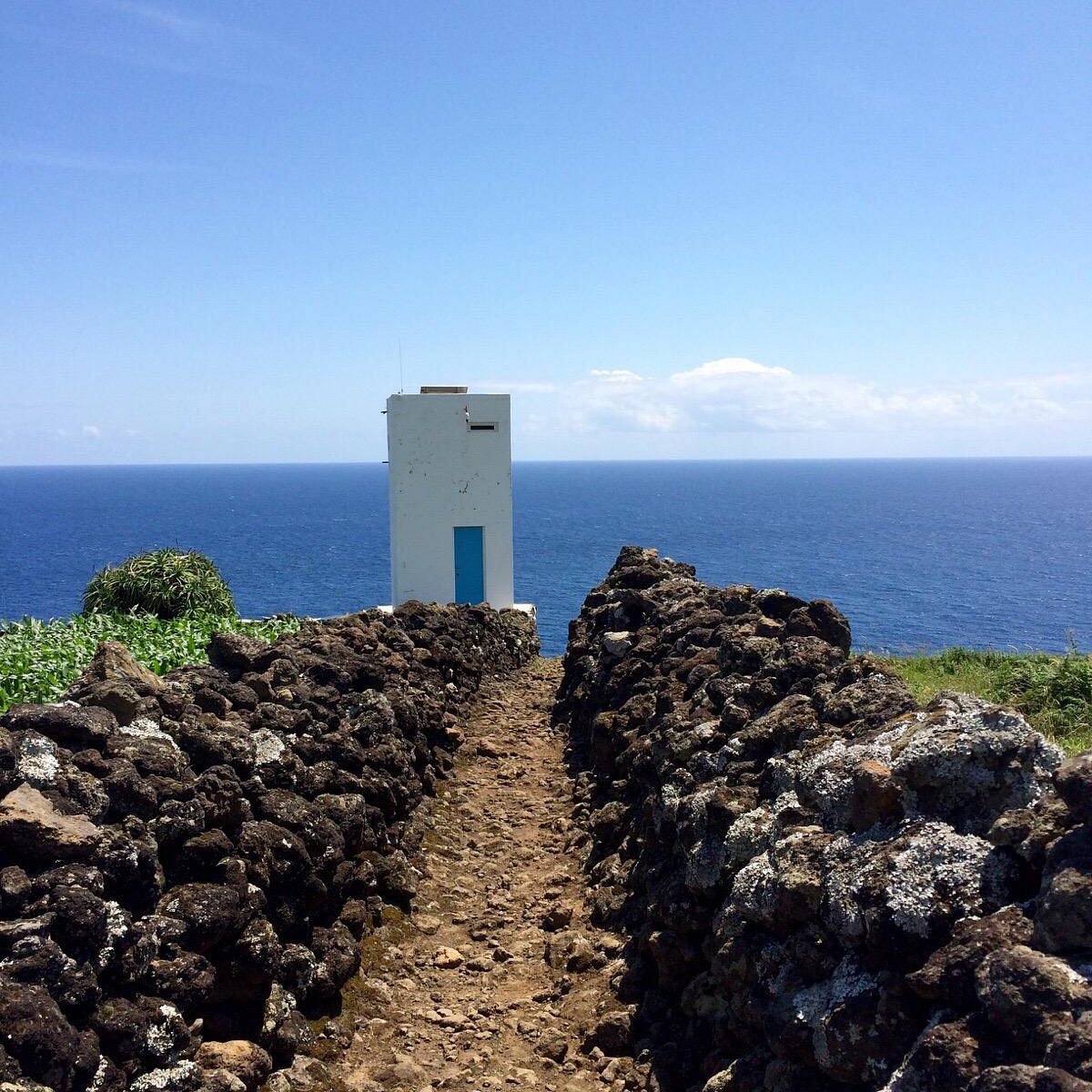
This lookout point is a critical part of our tracking system, using binoculars to spot cetaceans from the cliffs. It connects directly to the historical methods used in the islands for centuries.
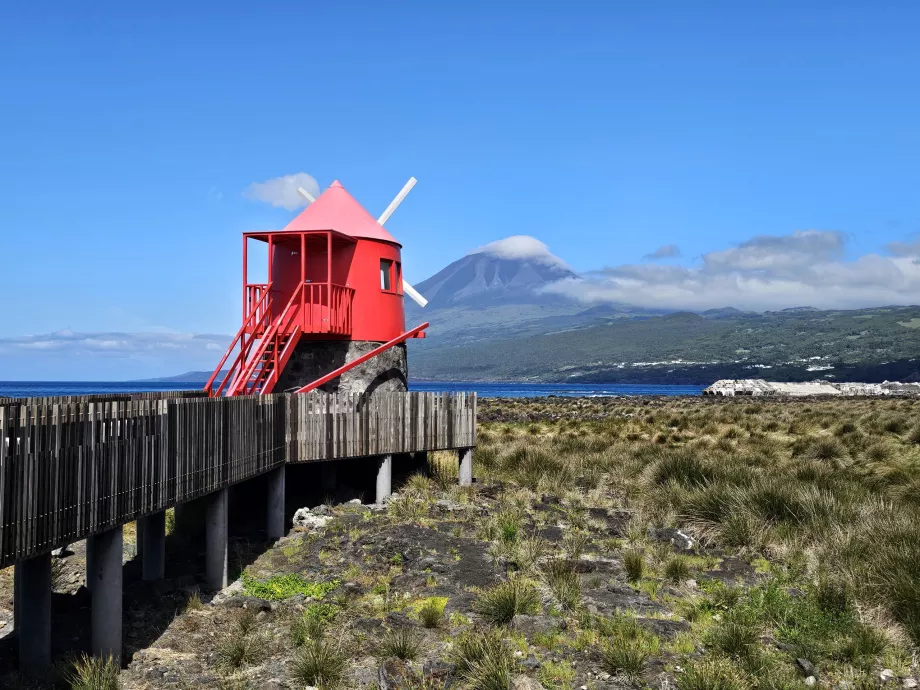
This iconic red-painted windmill sits within a dry lava field and serves as a primary visual landmark of the town. It offers a striking photographic contrast against the backdrop of the mountain.
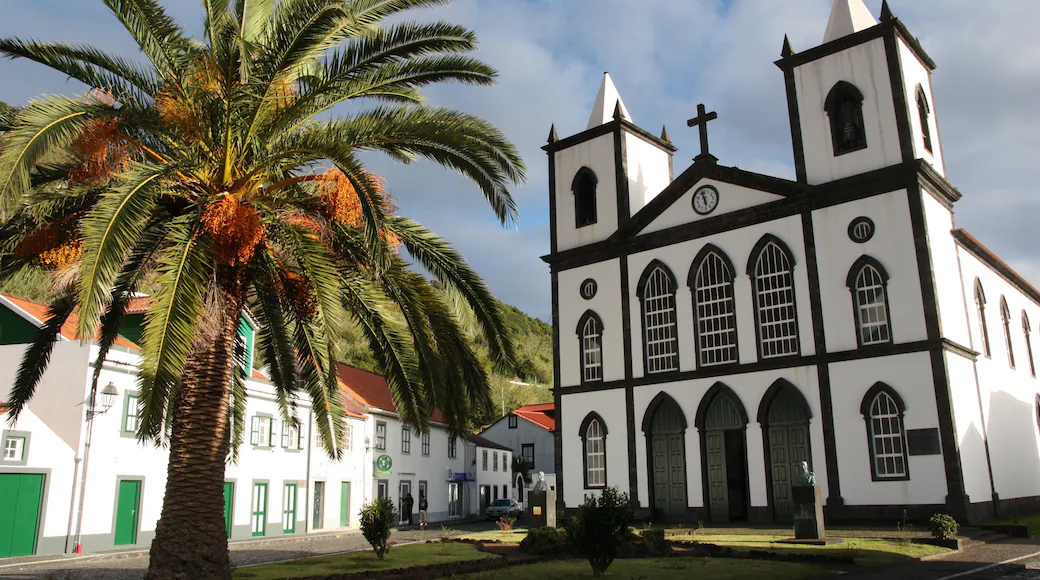
This church stands in the heart of the village and reflects the island's deep-rooted history. It remains a central historical landmark within walking distance of the harbor.
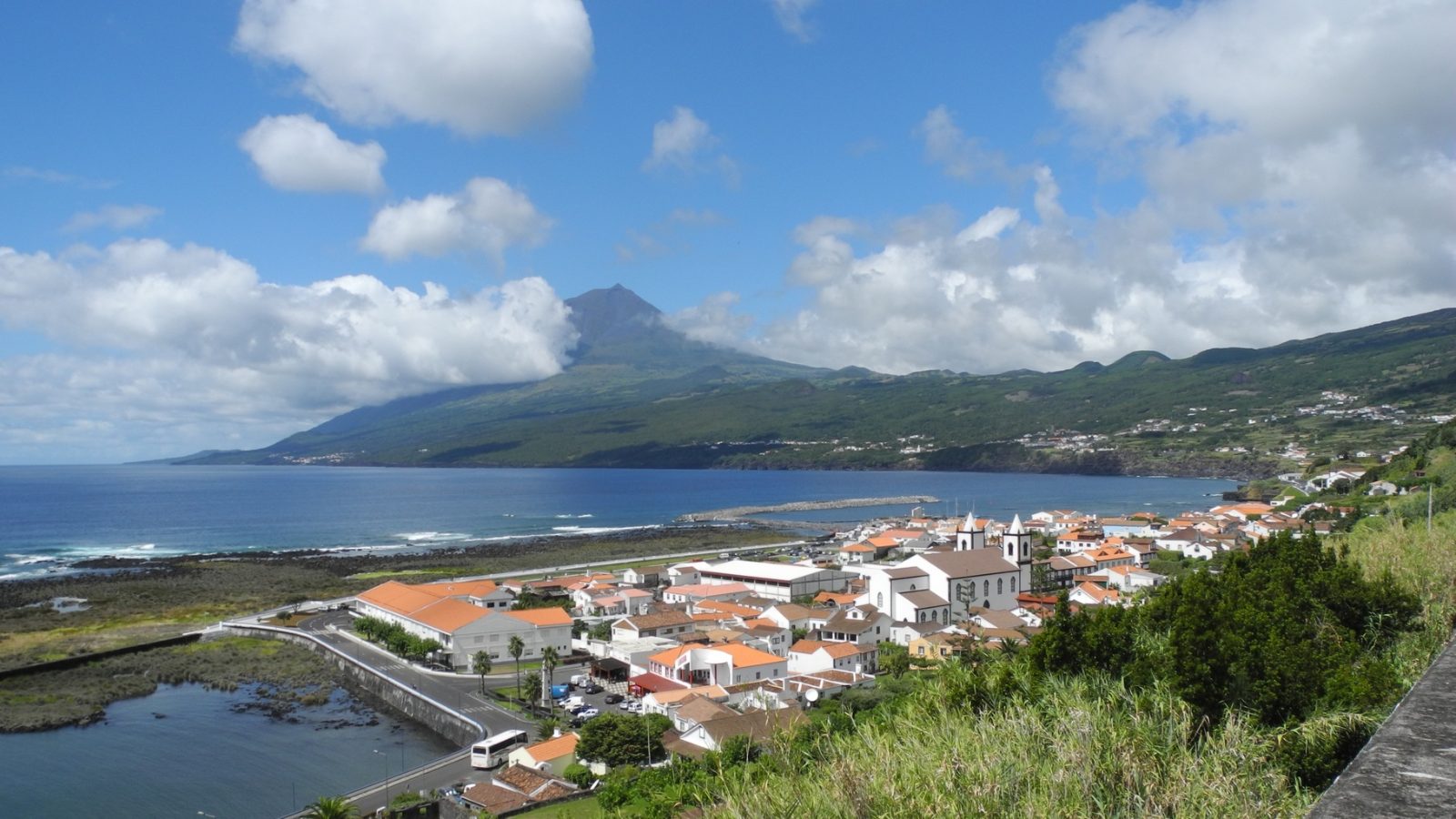
This is the primary departure point for all our sea excursions and remains the heart of the local maritime culture. You can observe the traditional boats and the morning hustle of the staff preparing for tours.
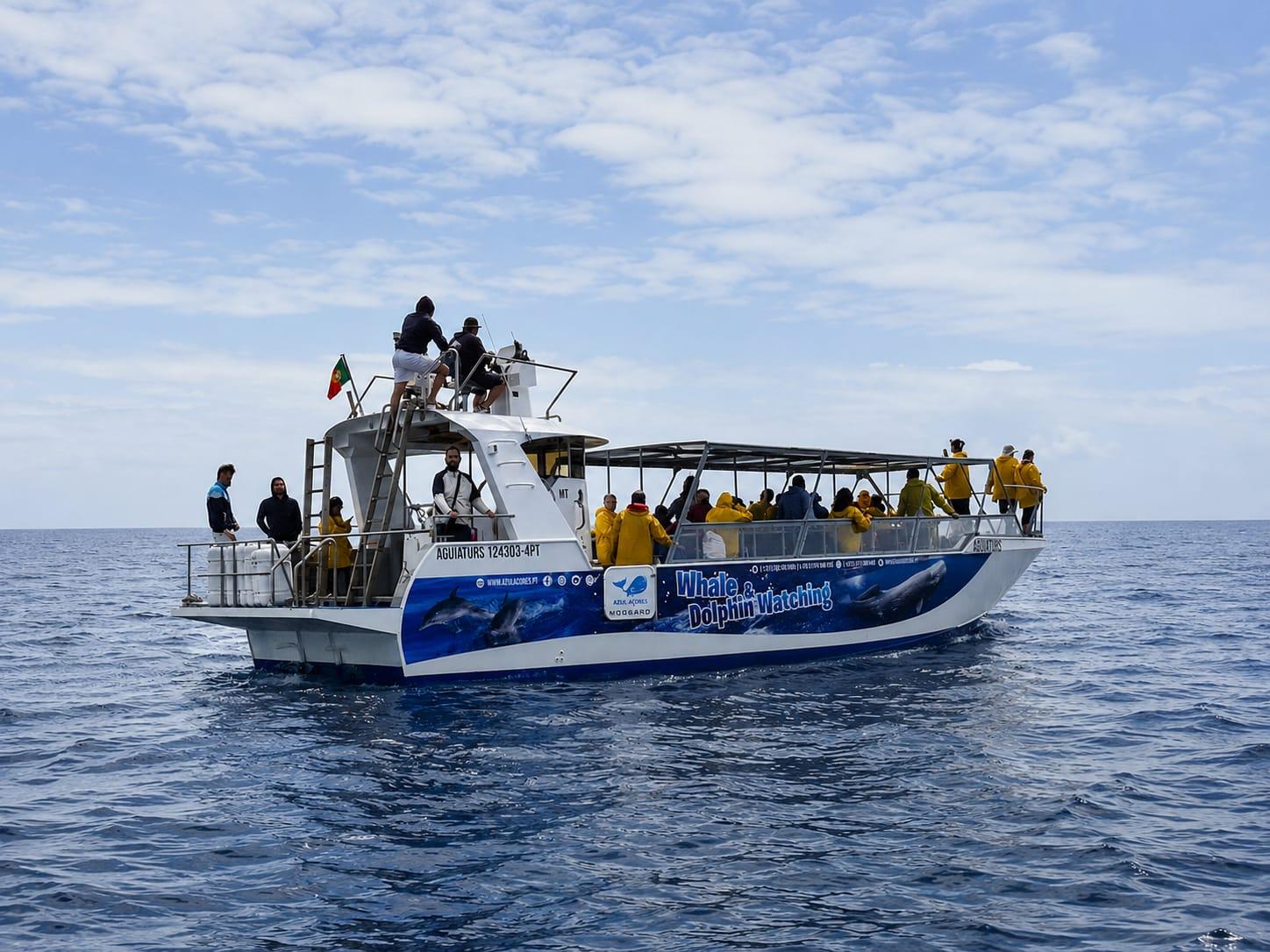
You board the catamaran at Lajes harbor at 9:00, when the Atlantic is still glassy and the vigia has already radioed a sperm whale position eight kilometers southwest.
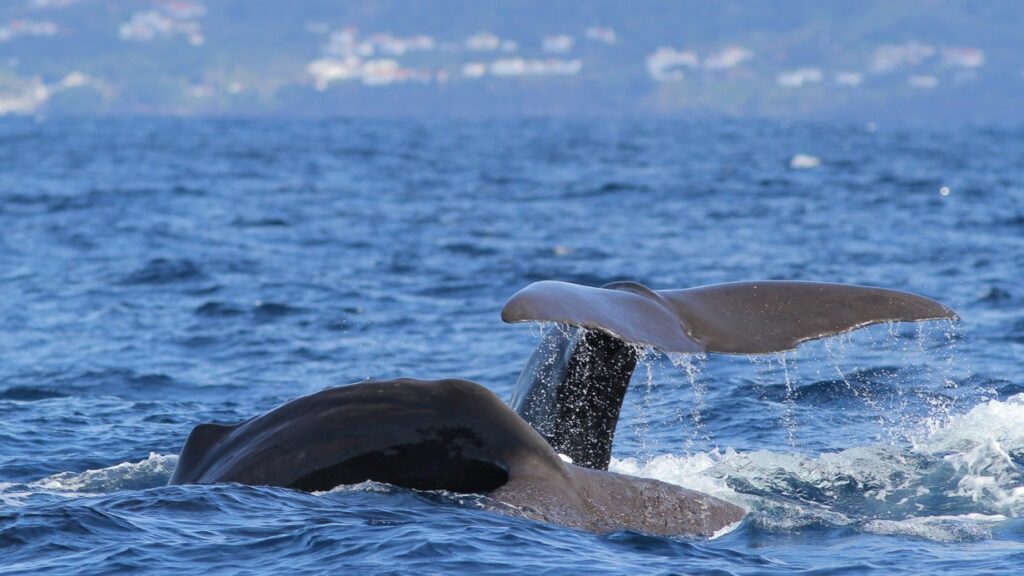
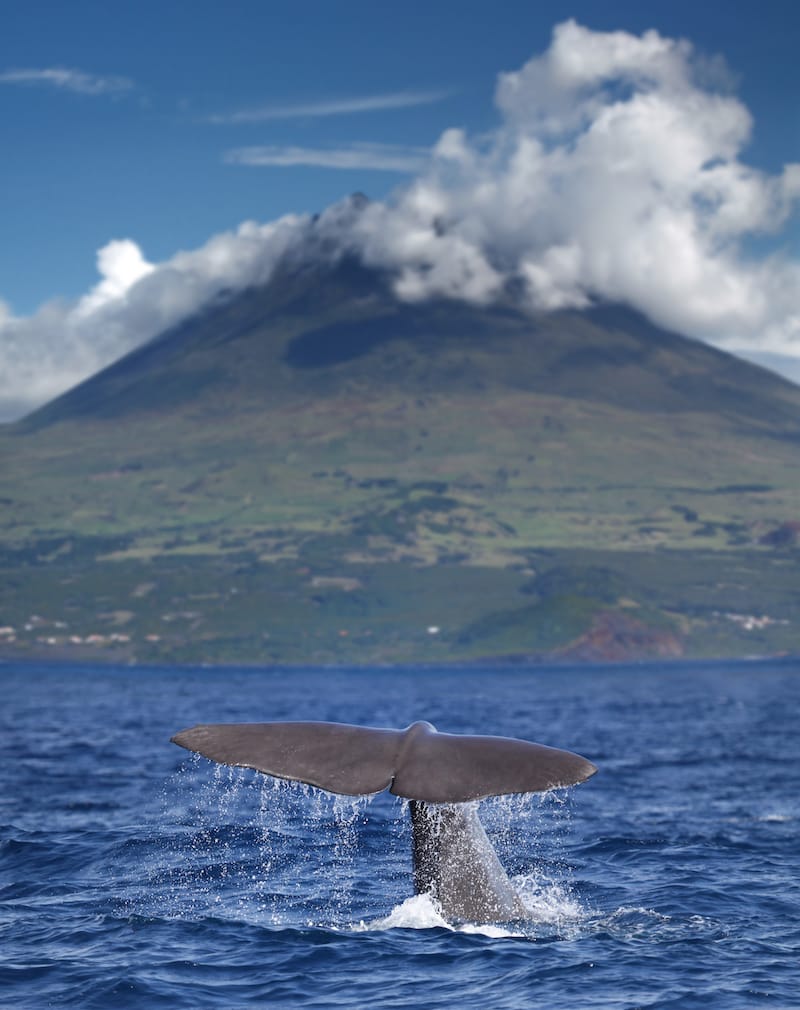
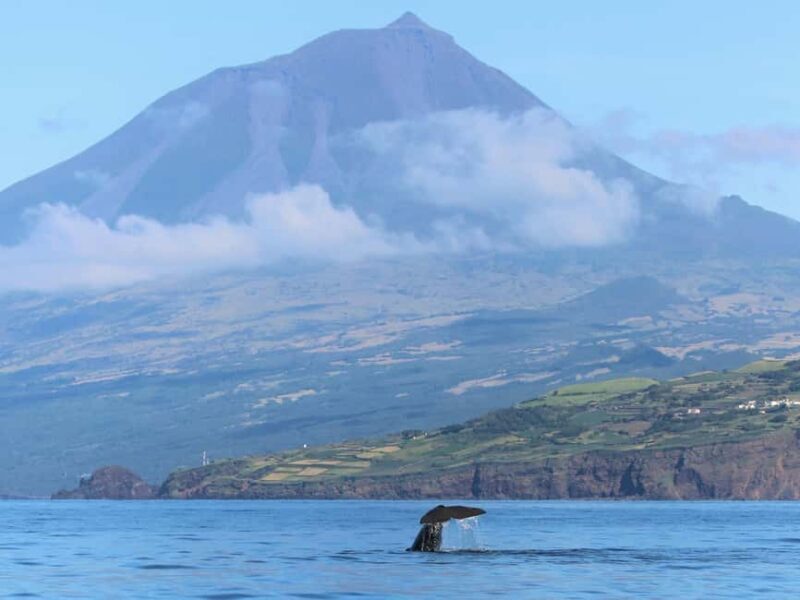
The naturalist briefs you on approach protocols as the boat clears the breakwater, and within twenty minutes you see the first blow—a bushy forward-angled plume that marks a sperm whale at the surface. The engines cut to idle at 100 meters. You watch the whale breathe in a steady rhythm, its wrinkled back rolling through the sequence, and then the broad flukes lift clear of the water and slide vertically down. The naturalist notes the time and explains you will wait here: sperm whales dive for thirty-five to fifty minutes, and this one will surface near where it went down.
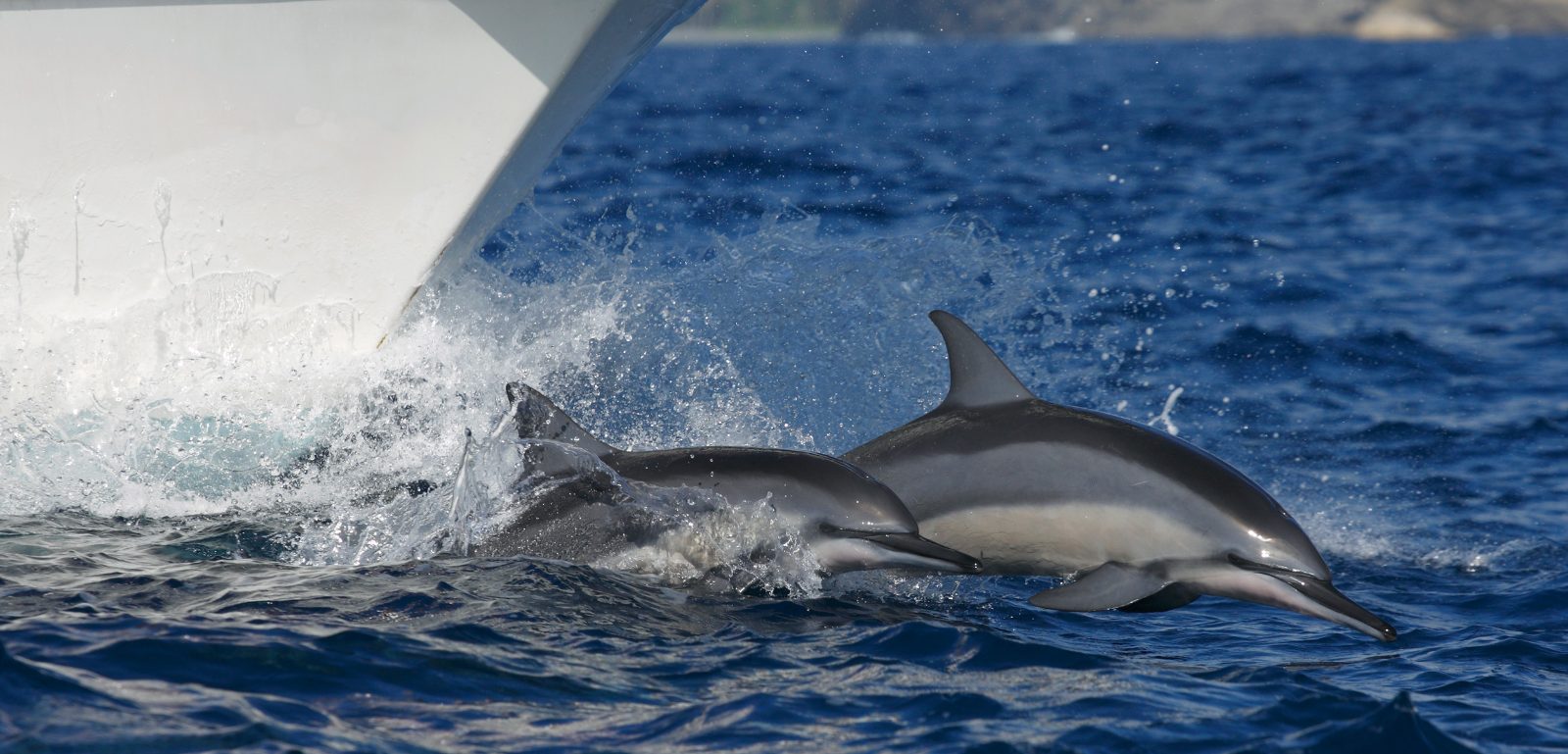
The wait is not silent. A pod of common dolphins arrives, bow-riding and leaping in synchronized arcs. The hydrophone speaker crackles with clicks—another sperm whale echolocating in the deep. At forty-two minutes the whale surfaces 80 meters off the port side, blowing five times in quick succession before arching into another dive. You photograph the flukes as they rise, capturing the notches and scars that identify this individual. On the return transit a Risso's dolphin breaks the surface, its body pale with crisscrossed scars. The naturalist counts it, logs the position, and the radio chatter confirms two more boats have found blue whales farther offshore.
All the details about your upcoming adventure in one place
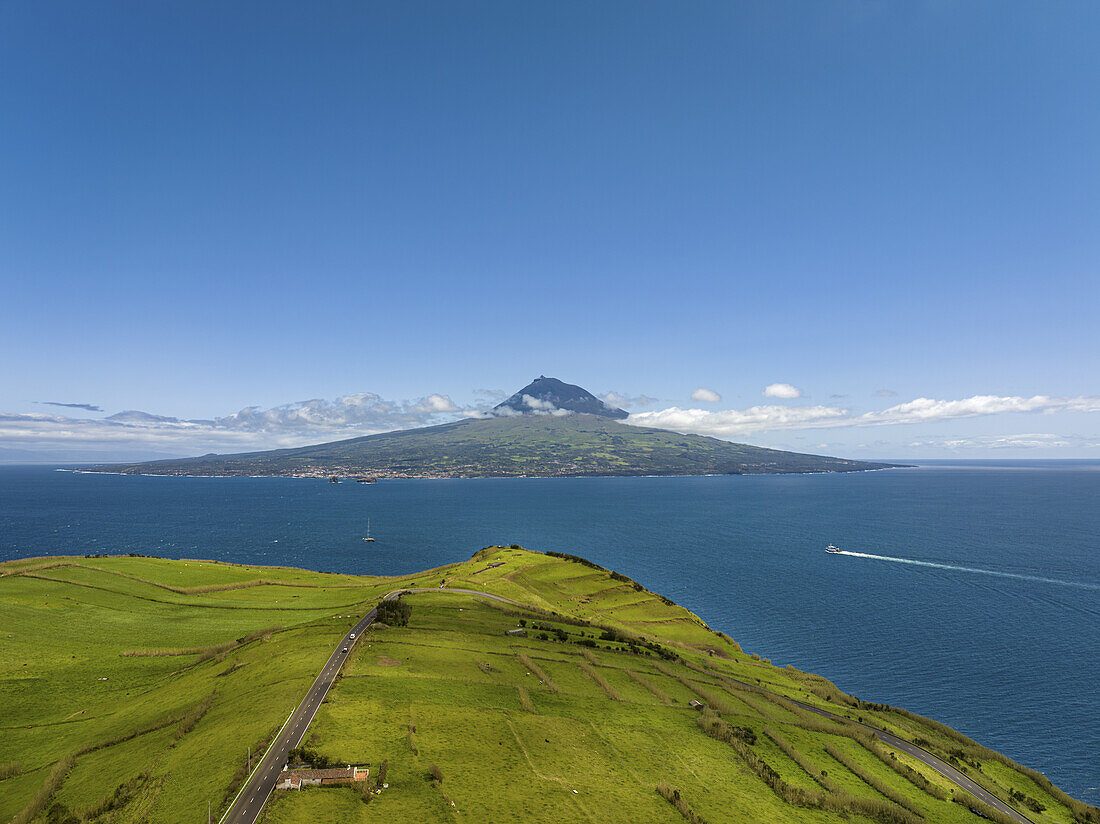
Pico whale watching offers encounters with sperm whales, blue whales, and dolphins in Atlantic waters between March and October. Marine biologists guide pico whale watching tours from Lajes do Pico, using lookouts stationed on clifftops to spot cetaceans before boats approach. The nutrient-rich channel between Pico and Faial creates feeding grounds that attract over 20 whale species year-round.
Pico Island sits atop the Mid-Atlantic Ridge, where tectonic forces push nutrient-rich currents toward the surface and create one of Europe's most reliable cetacean corridors.
Twenty-four whale and dolphin species pass through the Azorean archipelago, and thirteen are year-round residents in the channel between Pico and São Jorge. Sperm whales dive to 1,000 meters along the submarine canyon system that parallels Pico's southern coast, surfacing every forty minutes to breathe in sequences that naturalists can read like text.
Whaling defined Lajes do Pico for three centuries. Vigia lookouts perched on clifftop stone towers scanned the Atlantic for blows, and when a sperm whale surfaced, crews launched open boats and rowed toward the animal with hand harpoons. The last commercial hunt ended in 1987. Former whalers retrained as cetacean guides, and the same vigias that once directed harpoon strikes now radio GPS coordinates to research vessels and tour catamarans. Pico whale watching tours depart from the same harbor where whaling boats once returned with carcasses, and several operators employ descendants of the men who worked those boats.
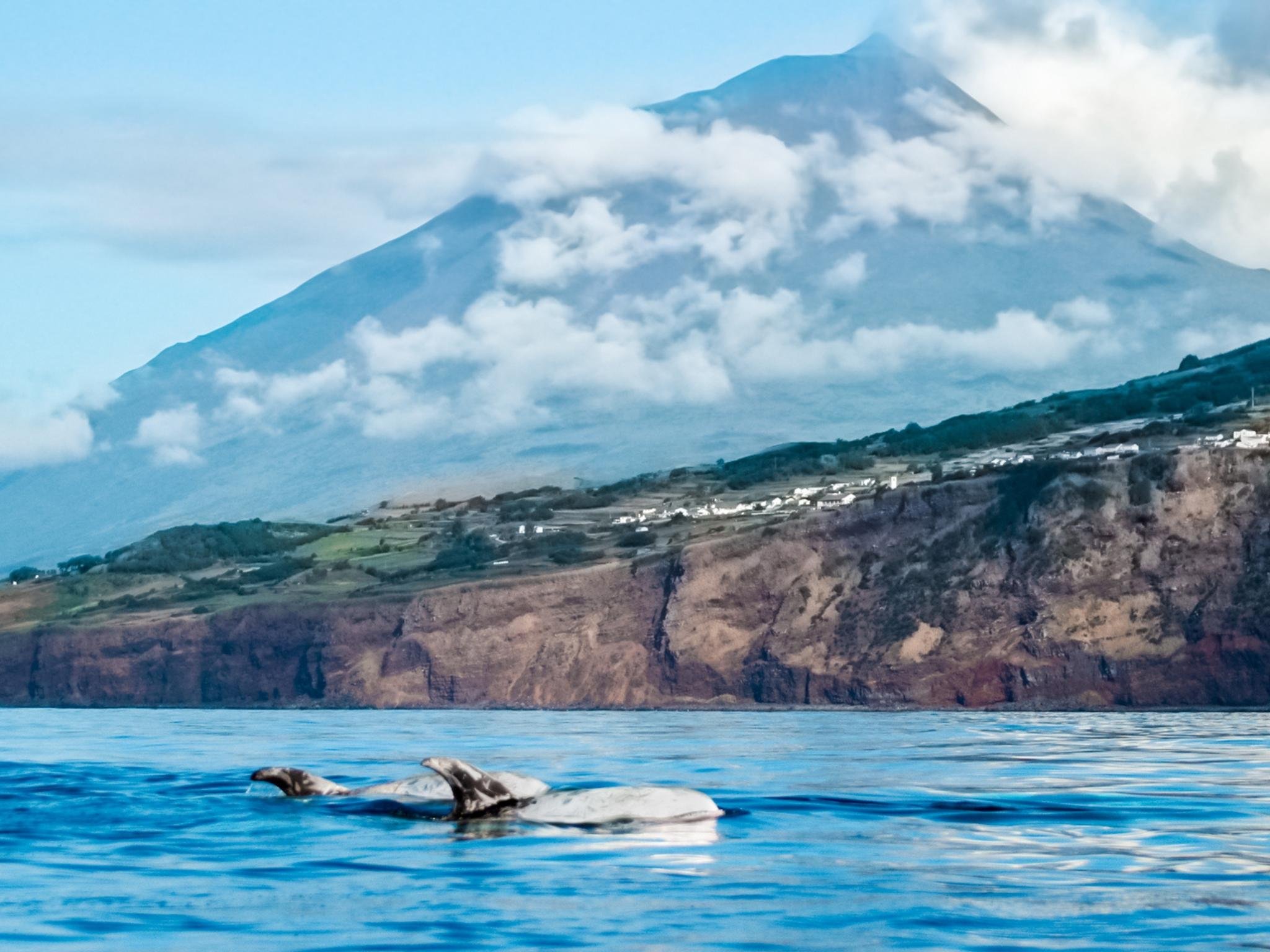
The resident sperm whale population numbers roughly 200 individuals, identified by fluke patterns photographed during dives. Short-finned pilot whales travel in matrilineal pods of twenty to forty animals. Common dolphins form superpods exceeding 1,000 individuals during spring mackerel runs. Risso's dolphins, identifiable by scarring that accumulates with age, patrol the deeper offshore zones. Sei whales migrate through in April and May. Blue whales, the largest animals ever to exist, pass Pico in March and again in June, visible as long dark shapes beneath the surface before their columnar blows rise six meters into the air.
Marine biologists from the University of the Azores maintain photo-identification databases and acoustic monitoring arrays throughout the channel. Several pico whale watching operators contribute sighting data to these research programs, and some excursions carry graduate students who collect behavioral observations and biopsy samples under permit. The Azorean government restricts approaches to 50 meters for most species and prohibits swimming with sperm whales entirely, regulations enforced by the regional maritime police and respected by certified operators.

Former whalers retrained as cetacean guides, and the same vigias that once directed harpoon strikes now radio coordinates to research vessels.
Wear comfortable, layered clothing suitable for a marine environment. A windbreaker or waterproof jacket is essential as temperatures drop significantly once at sea.
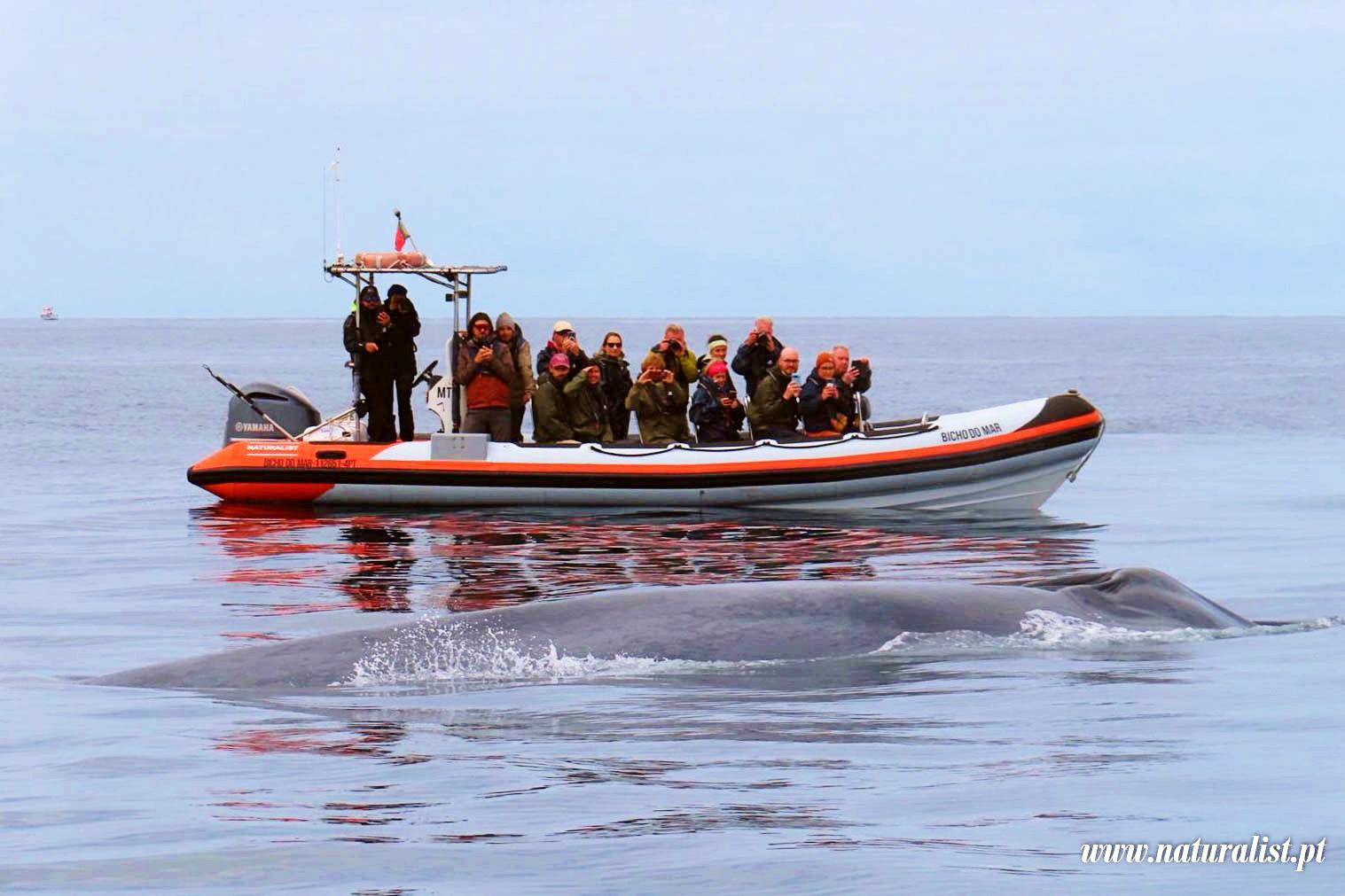
Space on our zodiacs is strictly limited and open to the elements. Please bring only small, waterproof bags for your belongings.
Capturing images of marine life is encouraged for research. Please ensure your camera equipment is secured against water spray during the boat transit.
Children are welcome, though our pico whale watching tours require passengers to be comfortable in a fast-moving, open-water vessel. Please advise our team of the ages of younger guests prior to booking your pico whale watching tickets.
The pico whale watching base is accessible, but zodiac boat boarding requires physical agility. Please contact us in advance to discuss specific mobility needs for your pico whale watching tour.
Bring your own water and light snacks for your pico whale watching experience. We provide a small local beverage at the end of every trip.
Opening hours
08:30–20:00
Address
Rua dos Baleeiros, 9930-143 Lajes do Pico, Azores, Portugal
Base entry
Free to booking office; boat tour fees apply
Best arrival
08:30–13:30 (Morning for calmest sea conditions)
Storage
Not provided; travel light for boat trips
Lajes port
Historic south coast departure point
For sea activities, request a refund more than 4 days before departure for a full return. No refund is provided for cancellations 2 to 4 days before, though rescheduling within the current season is possible.
Recommended time
4-5 hours
To experience pico whale watching under optimal conditions, plan to spend a half day at the office and on the water. Following the best arrival window of 08:30–13:30 ensures you secure space for morning excursions when sea conditions are typically calmest. While booking office traffic remains steady, securing your pico whale watching tours in advance is advisable to manage your schedule effectively. Travelers should account for extra time before departure to complete registration and receive safety briefings for their boat trip.
Crowd levels through the day
Embarking on a pico whale watching adventure with your children offers a unique chance to encounter majestic marine life in their natural Atlantic habitat. These educational outings provide families with meaningful insights into cetacean biology led by professional marine biologists.
Morning departures between 08:30 and 13:30 are recommended as they typically offer the calmest sea conditions for spotting whales and minimizing potential discomfort for young travelers.
While many pico whale watching tours welcome children, please note that some vessels have a minimum age requirement of 8 years old to ensure safety during the marine excursion.
For families with younger children or those seeking extra privacy, booking a private charter allows your group to customize the pace and duration of the trip according to your needs.
Since strollers are not permitted on board, ensure children are dressed in windproof layers and apply sunscreen before departure to stay comfortable while observing the ocean wildlife.
Make sure to secure your pico whale watching tickets in advance and arrive at the booking office in Lajes do Pico at least 30 minutes before your scheduled departure for the required pre-trip safety briefing.
Visitors planning their pico whale watching experience in Lajes do Pico will find several excellent dining options located along the harbor front. These establishments provide a convenient way to refuel after returning from your marine wildlife excursion near the Atlantic Ocean.
Located right near the harbor, this spot is ideal for a post-tour meal or a refreshing beverage. It is known for its relaxed atmosphere and proximity to the main office where guests secure pico whale watching tickets.
Real experiences from real travelers
We spotted three sperm whales during our morning tour and the crew shared fascinating details about their migration patterns. The Atlantic was calm and Mount Pico provided a dramatic backdrop throughout the trip. Our marine biologist guide explained how cetacean populations have recovered in these waters over recent decades.
The pico whale watching tour delivered exactly what we hoped for with sightings of both sperm whales and a pod of common dolphins. Our captain adjusted the route based on recent sightings and we spent nearly twenty minutes observing a mother and calf. The professionalism of the crew made the experience educational as well as memorable.
Saw two large sperm whales and learned about the island's whaling history turned conservation success. The boat was comfortable and stable even when we ventured further offshore. Our guide pointed out various seabirds including Cory's shearwaters that we would have missed otherwise.
We were fortunate with clear skies though the Atlantic swell was noticeable. The crew on our pico whale watching tickets were knowledgeable about cetacean behavior and respectful of approach distances. We observed one sperm whale diving and several bottlenose dolphins but visibility decreased later in the trip.
The three-hour tour from Lajes do Pico exceeded expectations with multiple whale sightings and a large pod of Risso's dolphins. Our marine biologist provided context about the Mid-Atlantic Ridge ecosystem and why these waters attract so many species. The volcanic landscape visible from the boat added to the dramatic setting.
Booking pico whale watching tours was the highlight of our Azores trip. We encountered a group of sperm whales and the crew explained their deep-diving capabilities and echolocation. The September weather was mild and the crew's respect for marine life protocols was evident throughout.
Our guide identified five different cetacean species during the voyage including pilot whales which are less commonly seen. The hydrophone allowed us to hear sperm whale clicks underwater which added another dimension to the experience. Lajes harbor provided a scenic departure point with the volcano towering above.
We spent forty minutes with a pod of sperm whales that surfaced repeatedly near our vessel. The crew maintained proper distance while ensuring excellent viewing opportunities. The combination of marine life and Pico's volcanic backdrop created striking photographic conditions.
The pico whale watching experience was well-organized though we only spotted one whale briefly due to sea conditions. Our crew worked hard to locate cetaceans and we did see several dolphin species. The educational component about Azorean marine ecosystems was thorough and the boat itself was well-maintained.
Three sperm whales surfaced within fifty meters of our boat and we watched them for nearly half an hour. The crew's knowledge of individual whale identification through fluke patterns was impressive. Clear visibility allowed us to see Mount Pico throughout the journey and the Atlantic remained remarkably calm.
Everything you need to know for your journey
Our base is open daily from 08:30–20:00.
Yes, booking in advance is essential to guarantee your spot on our zodiacs.
Entry to the booking office at Rua dos Baleeiros is 0 EUR for all visitors.
The best arrival window is 08:30–13:30, as morning departures usually encounter the calmest sea conditions.
Yes, families are welcome, provided participants are comfortable on a small, fast-moving boat.
We encourage photography for scientific research, but please ensure your gear is protected from sea spray.
Wear layers, a windbreaker, and comfortable shoes with good grip.
Tours may be rescheduled if sea conditions are unsafe, ensuring your safety at sea.
The historic Whaler's Museum is located right next to our base in Lajes do Pico.
Join thousands of happy travelers who have discovered this incredible experience
Book Your Experience Now