

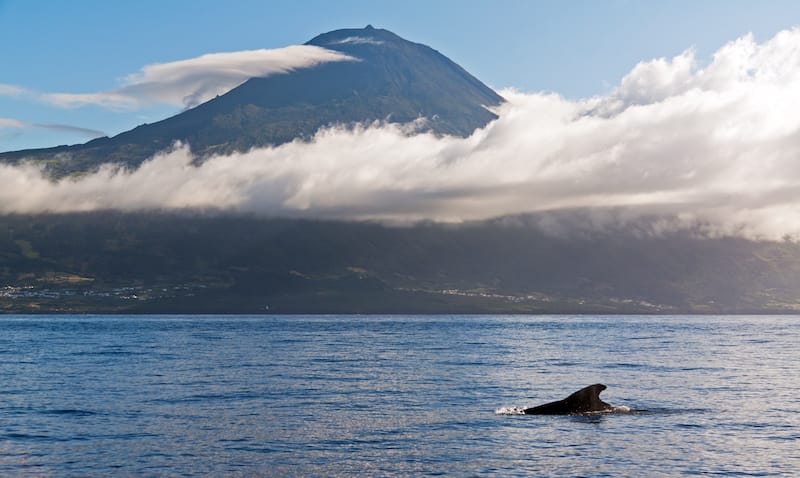
Quick answer
Dress in three layers for Pico whale watching: a moisture-wicking base, an insulating fleece or wool mid-layer, and a waterproof windproof jacket on top. Morning departures from Madalena and Lajes harbors encounter temperatures between 12 and 18 degrees Celsius with ocean spray and sustained wind. Wear non-slip closed-toe shoes, bring polarized sunglasses, and pack a hat that secures under your chin. Tours operate year-round from 09:00 to 18:00, but conditions shift with the season.
The sperm whale migration corridor off Pico's southern coast runs through some of the North Atlantic's most exposed water. Tour boats depart Madalena Harbor and Lajes do Pico Harbor into conditions that change within minutes—flat morning glass giving way to wind chop, or sudden fog rolling in from Faial. The right clothing for Pico whale watching accounts for three variables: the 12 to 18 degree air temperature, the wind amplified by boat speed, and the ocean spray that reaches even passengers seated midship. Layering solves the core problem. Cotton traps moisture and loses all insulating value when wet, so base layers should be synthetic or merino wool. A mid-layer of fleece or a lightweight down vest holds warmth without bulk. The outer shell must be both waterproof and windproof—a rain jacket alone will not block the sustained 20-knot winds common off Pico's southern shelf. Tour operators provide flotation vests, but these go over your clothing and add no thermal protection. Footwear determines your stability on a boat deck that pitches and rolls with Atlantic swells. Closed-toe shoes with non-slip rubber soles are required for safe movement. Sandals, flip-flops, and smooth-soled fashion sneakers are prohibited on most tours. Deck shoes, trail runners with aggressive tread, or waterproof hiking boots all work. Bring a second pair of socks in a dry bag if your first pair gets soaked. Sun exposure on the open ocean exceeds expectations. Even under cloud cover, UV reflection off the water reaches skin and eyes. Polarized sunglasses reduce glare and help spot whale blows and dorsal fins against the surface. A hat with a chin strap stays on your head in wind gusts. Reef-safe sunscreen protects exposed skin without damaging the marine ecosystem. Tours from Madalena and Lajes run daily between 09:00 and 18:00, with morning and early afternoon departures offering the calmest conditions for observing sperm whales, blue whales, and resident dolphin pods. Proper preparation for what to wear on Pico whale watching tours allows you to focus on the cetaceans rather than your comfort.
“The open Atlantic between Pico and Faial channels wind and spray onto whale-watching boats, even on calm days.”
Pico Whale Watching What to Wear: Essential Gear and Clothing
Prepare the right clothing and gear to stay comfortable and safe during your whale watching tour.
-
Book your whale watching tour online — Tours depart from Madalena or Lajes harbors between 09:00–18:00 and fill quickly in peak season.
-
Wear waterproof jacket and trousers — Sea spray is constant on open boats, even in calm conditions.
-
Dress in layers under waterproofs — Atlantic wind chill drops perceived temperature 5–10°C below land readings.
-
Bring non-slip closed-toe shoes — Wet boat decks require grip; sandals and heels are not permitted.
-
Pack sunglasses with retention strap — Glare off water is intense, and wind can pull unsecured eyewear overboard.
-
Apply SPF 30+ sunscreen before departure — UV reflection from the ocean doubles exposure even on overcast days.
-
Bring a warm hat or beanie — Head and ears lose heat rapidly in offshore wind.
Optimal Timing for Pico Whale Watching What to Wear
The optimal window for whale watching on Pico Island occurs from April to October, with morning departures offering the most stable sea conditions. Planning your trip during these months increases the likelihood of sightings while minimizing the impact of shifting Atlantic weather patterns.
April to June
Moderate15°C to 20°C; spring breezes
Spring brings migratory species and frequent sightings. High sea activity requires reliable waterproof layers.
July to September
High22°C to 25°C; calm seas
Stable conditions make this the peak period. Light windbreakers are sufficient during calm morning hours.
Weekday mornings
Lower volume—
Morning tours often provide the calmest waters of the day. Less wind spray frequently allows for lighter, breathable clothing choices.
October
Low18°C to 22°C; variable winds
The season concludes with cooler temperatures and increased wind. Prioritize wind-resistant gear for afternoon boat excursions.
Verdict: For the most favorable conditions, aim for weekday morning tours between July and September.
Pico Whale Watching What to Wear: Daily Operating Hours
The whale watching operations on Pico Island maintain a consistent schedule throughout the week. These hours allow visitors to coordinate their arrival and wardrobe preparations with scheduled tour departure windows.
| Monday | 09:00–18:00 | |
|---|---|---|
| Tuesday | 09:00–18:00 | |
| Wednesday | 09:00–18:00 | |
| Thursday | 09:00–18:00 | |
| Friday | 09:00–18:00 | |
| Saturday | 09:00–18:00 | |
| Sunday | 09:00–18:00 |
Pico Whale Watching What to Wear: Entrance and Tour Fees
There is no entrance fee to access the harbor areas on Pico Island. Costs for whale watching are associated exclusively with individual boat tour bookings.
Visitors pay no entrance fee, with total costs depending solely on the specific whale watching tour package selected.
How to Reach Pico Whale Watching What to Wear Locations
Whale watching departures are located at the harbors of Madalena and Lajes do Pico on Pico Island. Visitors typically reach these coastal points via rental car or local taxi services.
ER1-1A highway to Madalena or Lajes do Pico
Local island taxi services
Walking from town centers to harbor piers
Check availability
Frequently asked questions about pico whale.watching what to.wear
Everything you need to know about pico whale.watching what to.wear